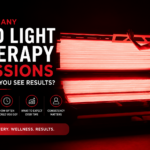

If you are considering red light therapy, one of the first questions you are likely to ask is: how many sessions do I need before I see results?
There is no fixed number of red light therapy sessions that guarantees results for everyone. How quickly you notice a difference depends on your goal, the treatment protocol, the equipment being used, how consistently you attend sessions and your individual response.
Some people may notice how they feel after an individual session, particularly when using red light therapy as part of a recovery routine. Other goals, such as supporting skin health and appearance, are better assessed over a consistent routine lasting several weeks.
The important point is to think beyond a single session. Red light therapy is generally better approached as part of a consistent wellness or recovery routine rather than a one-off treatment.
How Many Red Light Therapy Sessions Does It Take to Work?
There is no universal number of sessions that tells everyone when red light therapy will “work”.
Your reason for using red light therapy makes a difference. Someone using it as part of their post-exercise recovery routine may be interested in how they feel following treatment, while someone focused on skin health may be looking for gradual changes in appearance.
The treatment protocol also matters. Different systems can use different wavelengths, light intensities, treatment times and recommended frequencies, so session numbers cannot always be compared between different providers or devices.
A useful way to think about the process is:
The number of red light therapy sessions you may need can vary depending on your goal and the treatment protocol being followed.
- After one session: You may notice how you feel following treatment, although one session cannot predict longer-term results.
- After several sessions: You can begin to assess how red light therapy fits into your recovery or wellness routine.
- Over several weeks: Consistency becomes more relevant when assessing gradual goals, such as supporting skin appearance.
- As an ongoing routine: Regular sessions can become one part of a wider approach to recovery and wellness.
Rather than focusing entirely on a specific number, the better question is whether you can establish a realistic routine and assess your experience over time.
What Can You Expect From Red Light Therapy Over Time?
Your experience with red light therapy can vary depending on what you are hoping to achieve.
After One Session
One session gives you an opportunity to experience the treatment and see how you feel afterwards. Some people may enjoy incorporating it into a post-exercise or self-care routine.
However, you should not expect one session to provide a reliable indication of longer-term outcomes.
After Several Sessions
Once you have attended several red light therapy sessions, you have more opportunity to assess whether the treatment fits comfortably into your lifestyle.
This is particularly useful if your goal is to make it part of a regular recovery or wellness routine.
Over Several Weeks
For gradual goals, consistency becomes more important.
If you are using red light therapy to support skin health and appearance, for example, it is more appropriate to assess your experience over several weeks rather than judging the treatment after a single visit.
As an Ongoing Routine
If you find that red light therapy fits well into your lifestyle, regular sessions can become part of a wider wellness routine.
This could include recovery after exercise, rest days, mobility work, good sleep, hydration, and a balanced diet.
When Might You Notice the Effects of Red Light Therapy?
The timeframe can vary considerably depending on your goal, treatment protocol and individual response.
Recovery and Post-Exercise Use
Red light therapy can be incorporated into a recovery routine by people who exercise regularly, including gym-goers, runners and athletes.
Some people may use a session after training or on a recovery day and pay attention to how they feel afterwards. However, red light therapy should not be viewed as a replacement for the fundamentals of recovery, such as adequate sleep, nutrition, hydration and appropriate rest.
For active people, the bigger benefit of establishing a regular routine is that red light therapy becomes easier to incorporate around training.
For example, you might choose a consistent day each week for a recovery session rather than only booking when you feel particularly tired after exercise.
Skin Health and Appearance
Skin-related goals generally require a different approach.
You should not expect to assess meaningful changes in skin appearance after a single red light therapy session. A consistent routine over several weeks provides a more appropriate timeframe for assessing your experience.
Your existing skincare routine, lifestyle and individual characteristics can also influence what you notice.
Red light therapy should therefore be considered as one part of a wider approach to looking after your skin rather than a standalone solution.
General Wellness
General wellness is more difficult to measure because there may not be one obvious result to look for.
Some people use red light therapy because they enjoy including it in their regular self-care or recovery routine.
In this situation, convenience and consistency can be more important than counting exactly how many sessions you have completed.
If you enjoy the treatment and find that it fits into your lifestyle, making it a regular part of your week may be more sustainable than booking occasional sessions whenever you remember.
How Often Should You Use Red Light Therapy?
How often you should use red light therapy depends on your treatment goal, the equipment being used and the recommended treatment protocol.
There is no universal schedule that is appropriate for everyone, and more frequent sessions do not automatically mean better results.
The best approach is to follow the guidance provided by your treatment provider and the specific red light therapy system.
For many people, consistency with red light therapy sessions is more useful than an irregular pattern of treatment.
For example, if you want to incorporate red light therapy into your recovery routine, you could choose a regular weekly session that fits around your training schedule.
The exact frequency should always be based on the treatment protocol rather than simply trying to maximise the number of sessions.
Can You See Results After One Red Light Therapy Session?
You may notice how you feel after one session, but one session should not be treated as a reliable measure of longer-term results.
This distinction is important.
If you are using red light therapy as part of a recovery routine, you may be interested in how you feel following an individual session.
If your goal is something that develops gradually, such as supporting skin appearance, assessing the treatment after one session is unlikely to tell you much about your longer-term experience.
Instead, consider whether red light therapy fits into your routine and assess your experience consistently over time.
Is Red Light Therapy Better When Used Regularly?
A regular routine can make it easier to understand how red light therapy fits into your lifestyle and whether you want to continue using it.
That does not mean that everyone needs to use red light therapy at the same frequency. More is not automatically better.
Instead, consistency means establishing a realistic routine that you can maintain.
For someone who exercises several times a week, that could mean incorporating red light therapy into a weekly recovery plan.
For someone focused on general wellness, it could become part of their regular self-care routine.
The key is to make the routine practical enough that you can maintain it.
What Affects How Quickly You See Results?
Several factors can influence how quickly you notice changes or how you experience red light therapy.
1. Your Reason for Using Red Light Therapy
Your goal affects how you should assess your experience.
Recovery, skin health and general wellness are different objectives and should not be judged against the same timeframe.
2. Consistency
Regular sessions make it easier to establish a routine and assess your experience over time.
Occasional sessions can still form part of your wellness routine, but an inconsistent pattern makes it harder to evaluate whether regular treatment is useful for you.
3. Treatment Protocol
The treatment protocol can include factors such as wavelength, light intensity, treatment duration and recommended frequency.
Treatment protocols can vary depending on the equipment and intended application. Dorset County Hospital NHS Foundation Trust describes photobiomodulation therapy using red LED light and notes that treatment duration can vary depending on the area being treated
This is why you should follow the guidance for the specific system being used rather than copying a schedule from another device or provider.
4. Individual Differences
Everyone’s experience can be different.
Your starting point, lifestyle and individual response can influence what you notice and when you notice it.
This is another reason why claims about a fixed number of sessions should be treated with caution.
5. Your Overall Routine
Red light therapy is only one part of a wider approach to recovery and wellness.
Sleep, nutrition, hydration, physical activity, rest and other lifestyle factors can all influence how you feel.
Building a balanced routine is therefore more useful than relying on one treatment alone.
6. The Equipment Being Used
Not every red light therapy system is identical.
Different equipment can use different wavelengths, light output, treatment areas and recommended session durations.
This means that saying “you need five sessions” or “you need ten sessions” without considering the actual treatment protocol can be misleading.
What Does a Consistent Red Light Therapy Routine Look Like?
A consistent routine does not have to be complicated.
The first step is choosing a frequency that fits naturally into your week and following the recommended treatment protocol.
For example, you could schedule a session around a regular training day, recovery day or another time when you already prioritise self-care.
The goal is to make your routine repeatable.
A wider weekly recovery or wellness routine might include:
- Red light therapy
- Adequate sleep
- Rest and recovery days
- Hydration
- Balanced nutrition
- Mobility or stretching
- Regular physical activity
For athletes and active people, the routine can be planned around training rather than treating recovery as something that only happens when you feel run down.
For general wellness, the same principle applies: choose a routine that is convenient enough to maintain.
Why a Red Light Therapy Membership Can Make Sense
One of the biggest challenges with any wellness routine is consistency.
If every session requires you to decide whether to book, when to attend and whether you have enough time, it can become easy to postpone.
A membership can make regular red light therapy sessions easier to plan because the treatment becomes part of an ongoing routine rather than an occasional booking.
This can be particularly useful if you already know that you want to use red light therapy regularly for recovery, wellness or self-care.
Rather than waiting until you feel that you “need” a session, you can build regular treatment into your schedule.
If you are based in Mansfield and want to make red light therapy part of a consistent weekly routine, HealthPod’s membership provides an option for making regular sessions easier to maintain.
Frequently Asked Questions
There is no fixed number of sessions that guarantees results. The timeframe depends on your goal, treatment protocol, individual response and consistency. Some people may notice short-term effects after a session, while other goals require regular use over a longer period.
The appropriate frequency depends on the treatment system, protocol and your intended use. Follow the guidance provided by your treatment provider and avoid assuming that more frequent sessions will necessarily produce better results.
You may notice short-term effects after an individual session, but one session should not be considered a reliable measure of longer-term results. For gradual goals, consistency over time is more relevant.
A regular routine can make it easier to assess your experience and incorporate red light therapy into your wider wellness or recovery plan. However, the appropriate frequency depends on the treatment protocol and should follow professional or device guidance.
Session length varies depending on the equipment and treatment protocol. At HealthPod, red light therapy sessions are available as part of its wellness services, so check the current treatment information when booking.
There is no single timeframe that applies to everyone. How long you notice an effect can depend on the goal, individual response and whether you continue with a consistent routine.
Weekly red light therapy may form part of a regular wellness routine, depending on the treatment protocol and your goals. Always follow the recommended guidance for the specific system being used.